Most couples hand their photographer a Pinterest board and hope for the best. Pinterest boards show style, but they do not tell a photographer which grandmother must be photographed, which cousin is flying in from Karachi for one night only, or which small detail your mother spent three months choosing. A shot list does. It is a short, specific document that protects the moments you will care about in ten years.
This guide gives you a South Asian wedding photography shot list for Houston weddings: 40 moments grouped by the order they happen on the day. It works for Pakistani, Indian, Bangladeshi, Sri Lankan and mixed-faith weddings, whether you are planning a Nikah, a Hindu ceremony, a Sikh Anand Karaj or a civil ceremony with a large reception. We are ZF Media Production, a studio in West Houston with more than 17 years of experience photographing South Asian weddings in Pakistan, Dubai and Texas. The list below is the one we use when families ask, “What should we tell the photographer?”
How to use a shot list without ruining the day
A shot list is not a script. A photographer who ticks boxes all day misses the unplanned laughter, the dad wiping his eyes, the flower girl asleep under a table. Use the list for two purposes only: people and objects that cannot be re-created, and moments that depend on timing.
- Keep your must-haves to about 15 to 20 items. Everything else is a bonus. Too long a list slows the day and leaves you tired in your own photos.
- Name people, not relationships. Write “Nani, Chacha Imran and Phupho Saima” rather than “extended family.” Add a phone number for one relative who can find them.
- Give each ceremony its own list. A Mehndi list and a Walima list are different documents.
- Tell us what to avoid. If an uncle is estranged or a relative is camera-shy, a photographer who knows in advance will protect everyone’s comfort.
Send the list at least a week before the wedding, then spend 15 minutes on the phone with your photographer going through it. That call is where most problems are solved.
Part 1: The details (6 moments)
Details are photographed first because they are ready before people are. They also tell the story of your wedding day to relatives who could not attend.
- The invitation suite, including the card, envelope, box or any custom design.
- The wedding outfits on hangers before anyone changes: lehenga, gharara, sherwani, shalwar kameez or saree.
- Jewelry, such as tikka, jhumar, nath, bangles, cufflinks and watch, photographed on a clean surface in window light.
- Henna on the hands, close up. If a design hides initials or a message, tell us.
- Shoes, accessories and fragrance, including any family heirloom worn by the bride or groom.
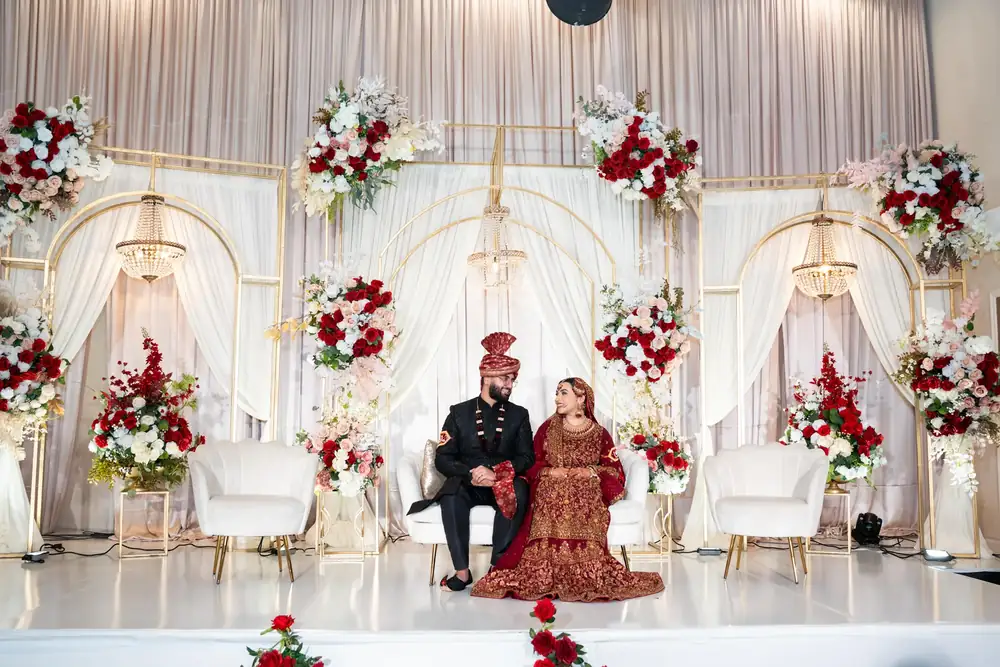
- The decor and stage before guests arrive, from the entrance to the final floral piece. Most decorators finish late, so ask them for a firm completion time.
Part 2: Getting ready (6 moments)
Getting-ready photos are where emotion shows up before the pressure of the day builds. Good ones need space, window light and a calm room.
- Hair and makeup in progress, taken from a distance so the artist is not interrupted.
- Mother helping with the dupatta, jewelry or sherwani, one of the most requested photos at South Asian weddings.
- Siblings and close friends around the bride or groom, in matching outfits if worn.
- The groom’s preparations: turban, sehra, safa or buttoning the sherwani with his father or brothers.
- A private prayer or dua if the family wishes. Tell us in advance whether to photograph it or step out.
- The reveal: the moment a parent, sibling or friend first sees the finished look.
For more on the bridal side, see our companion guide on Pakistani bridal getting-ready photography in Houston.
Part 3: Couple portraits (5 moments)
Couple portraits take less time than most people fear when the plan is clear. Aim for 30 to 45 minutes for the whole portrait session, not all day.
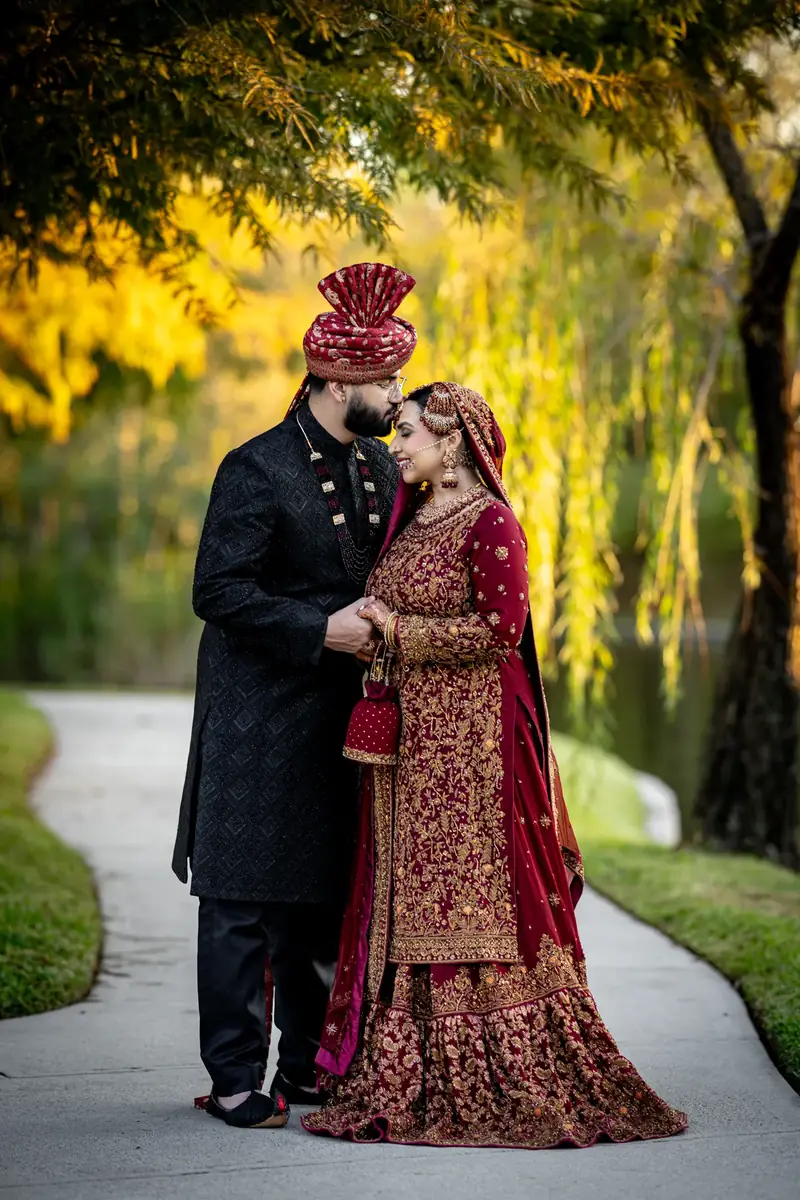
- The first look or first sight, either private or in front of family, depending on your tradition and comfort.
- One full-length portrait that shows the entire outfit, train or dupatta.
- A close-up of the couple’s hands with henna, rings and jewelry.
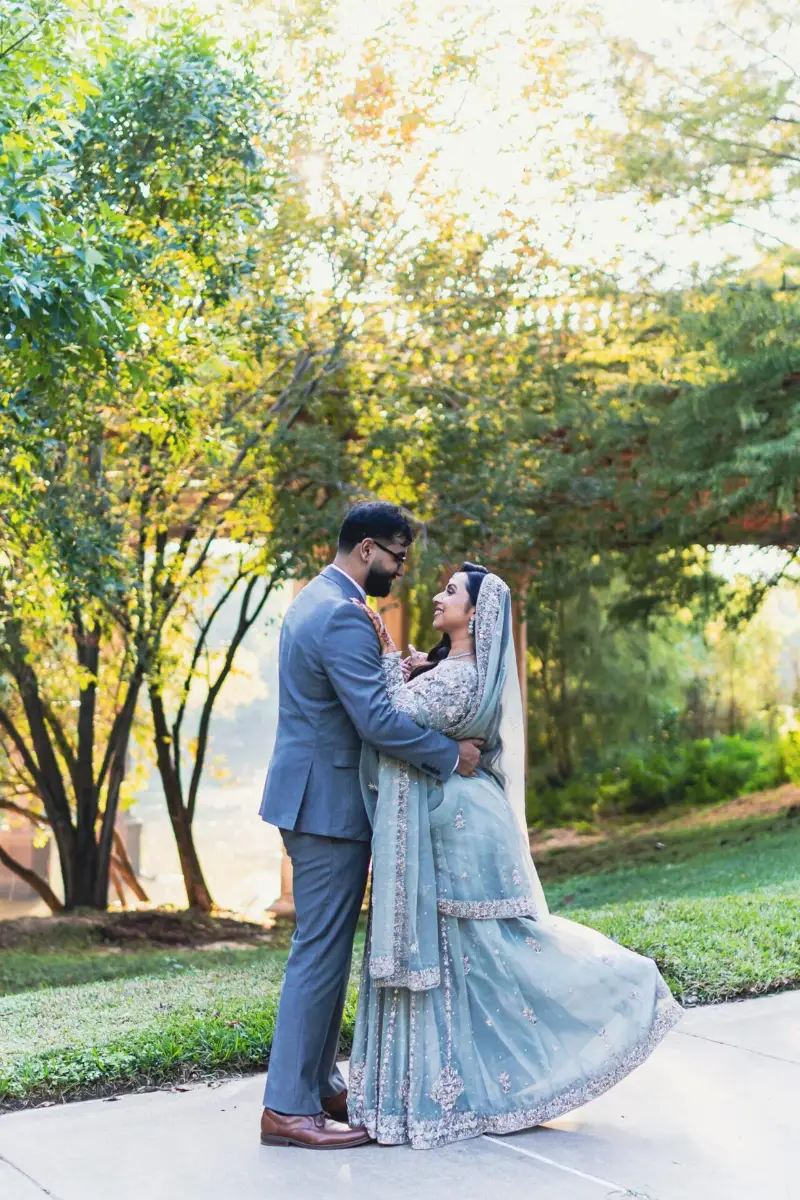
- A walking, relaxed pair of portraits in the venue’s best light. Our guide to wedding photo locations in Houston shows where this works well.
- A portrait just before sunset or in open shade if your schedule allows. Houston’s midday sun in summer is harsh, so late afternoon is kinder.
If you prefer a modest approach, say so. Many couples choose portraits that are formal, a short distance apart and focused on expressions rather than contact. A good photographer will build the plan around you.
Part 4: Family formals (7 moments)
Family formals are the most stressful part of most weddings, and the part couples most often regret skipping. Do them quickly, in a fixed order, with one organizer calling names.
- Bride with her parents, then with her parents and siblings.
- Groom with his parents, then with his parents and siblings.
- Couple with both sets of parents together.
- Grandparents with the couple, individually and as a group. Photograph them first, because elders tire.
- Each side of the extended family in a large group, shot from a slightly raised position so every face is visible.
- Couple with close friends, separately for bride and groom sides if that is easier.
- Cousins and the whole younger generation, usually the loudest and most fun photo of the day.
Our guide to family photos and stage photography at Pakistani weddings goes into the logistics of running these groups efficiently.
Part 5: The ceremony (6 moments)
The ceremony differs by tradition, so tell your photographer exactly what to expect and what the rules are.
- Arrival of both families and the first greetings.
- The officiant or Imam, and the moment the ceremony is formally started.
- The central ritual: Ijab-o-Qubool and signing of the Nikah Nama at a Nikah, the pheras or saptapadi at a Hindu ceremony, or the four laavan at an Anand Karaj.
- Exchange of rings, garlands or other tokens where they apply.
- Parents and elders offering blessings, including the dua after a Nikah.
- The first moment as a married couple and the congratulations that follow.
Religious venues have their own rules. Some mosques, gurdwaras and temples limit where a photographer may stand or whether shoes and head coverings are required. Always confirm with the venue, and read our Nikah and Walima photography page if your ceremony is Islamic.
Part 6: Entrances and the Baraat (4 moments)
- The groom’s procession or arrival, with the dhol, dancing and friends around him.
- The welcome by the bride’s family and the Milni, when elders from each side greet one another.
- The bride’s entrance, from the moment she reaches the door to the moment she reaches the stage or aisle.
- The couple’s grand entrance to the reception, which usually needs the lights, DJ and photographer on the same plan.
Part 7: The reception (6 moments)
- The first dance or a family performance, with a camera positioned for the dancers’ faces, not their backs.
- Speeches and toasts, which are better photographed from the side so the audience reaction is visible.
- The cake cutting or ceremonial moment in your tradition.
- The couple with each table or guest group, if you plan stage photos.
- A candid photo of the dance floor at its most crowded and joyful point.
- The farewell: the Rukhsati, Vidaai or send-off, plus the last photo of the night with parents.
What most shot lists forget
These are the photos couples ask for after the wedding, when it is too late. Add at least three of them.
- The elder who does not like being photographed but would treasure a photo with you.
- The family member who traveled the farthest.
- The catering, desserts and table decor, which many families paid a lot for and rarely see in photos.
- A group photo with your wedding party in their outfits, taken before the dance floor ruins the hair.
- The empty hall at the end of the night, with decor and lights, which closes the story nicely.
Timing: how long each part takes
As a rough guide, details take 30 to 45 minutes, getting ready two to three hours of overall coverage, couple portraits 30 to 45 minutes, family formals 30 to 40 minutes for about ten groups, and the ceremony according to your tradition. If your venue is more than 20 minutes from the hair and makeup location, add that travel to the schedule. Houston traffic on a Friday or Saturday evening can add 30 minutes without warning, so build a buffer before any fixed start time.
Planning the day backwards from the ceremony start works better than starting from the morning. Our Houston wedding photographer tips walk through a sample timeline.
Photo and video: coordinate the lists
If you hire a photographer and a videographer, give them the same list. A photographer and a videographer standing in each other’s frames is a classic problem, and it vanishes when both teams plan together. If you want one team for both, see our wedding photography and videography in Houston or our South Asian videographer page. Photography starts from $599; wedding films range from $1,500 to $4,000+ depending on days, hours and edit length. For a full explanation of what changes the price, read how much wedding videography costs in Houston.
Frequently asked questions
How long should a wedding shot list be?
Keep your must-have list to 15 to 20 items, plus a list of named family groups. The photographer will naturally capture hundreds of other moments without being asked.
Should I give my photographer a Pinterest board too?
Yes, for style and mood. Use the board for lighting, color and composition ideas, and use the written list for people and moments. A board cannot tell the photographer who your grandmother is.
How many family groups can we photograph?
Plan on 60 to 90 seconds per group. Ten groups take about 15 minutes. Thirty groups take about 45 minutes, which is why stage photos or a prepared list work better than improvising.
Do you photograph both bride and groom sides?
Yes. We plan coverage for both sides, including separate halls or gender-separated areas if your event requires them. We speak English, Urdu, Hindi and Punjabi, which helps with coordinating elders.
What if the ceremony is in a mosque or gurdwara?
Confirm the rules with the venue before the day. We follow dress and footwear requirements, agree positions in advance and work quietly during the ceremony.
Want us to turn this into a personalized list for your wedding? Tell us your date and venue, or call or WhatsApp 832-400-4333. Our studio is at 3505 S Dairy Ashford Rd, Suite 120, Houston, open Monday to Saturday, 9 AM to 6:30 PM.