On a Pakistani wedding day, the bride’s morning is one of the most emotional parts of the entire celebration. It is quiet compared with the Baraat or the Walima, but it holds the moments families talk about for years: a mother pinning the dupatta, sisters laughing during makeup, a father seeing his daughter in her wedding outfit for the first time, and the final, tearful goodbye of the Rukhsati.
This guide is for brides and families planning Pakistani bridal photography in Houston. It explains how to plan the getting-ready session, what to prepare, which details to photograph, how to handle privacy and modesty, and how the morning connects to the Rukhsati at the end of the night. We are ZF Media Production, a Pakistani-owned studio in West Houston. Our owner, Imran Islam, has photographed weddings for more than 17 years in Pakistan, Dubai and Houston, so the traditions below are familiar to us rather than new.
Why the bridal getting-ready session deserves its own plan
Most couples think of the Nikah and the Walima first and treat the morning as a quick warm-up. That is a mistake, for three reasons:
- It is the calmest time of the day. After the first guests arrive, the bride rarely has a free moment until the night.
- It is the best light. A window in a bright room gives soft, flattering light that no hall can match.
- It is when the family is together. Mothers, sisters, aunts and close friends are all in one room before the schedule splits them up.
A bridal session with a plan produces photos that look relaxed. A bridal session without a plan produces photos of a crowded room with a hairdryer, a pile of bags and a stressed bride.
Choosing the right room
The room matters more than the photographer. Before the wedding, check these five things:
- A large window. North- or east-facing windows give soft light in the morning. Open the curtains fully, and turn off warm overhead lights, which mix with daylight and make skin look orange or yellow.
- Space to move. A hotel suite or a living room works better than a small bedroom. A photographer needs about six feet of distance for natural portraits.
- A clean background. Move laundry, suitcases and water bottles out of the frame. A plain wall or a decorated corner makes the details stand out.
- Privacy. Decide who may be in the room during makeup and dressing. For brides who wear hijab or who prefer to be photographed only in certain situations, a plan agreed in advance keeps everyone comfortable.
- Time. Hair and makeup for a Pakistani bridal look often takes three to four hours, especially with a heavy dupatta and jewelry. Always add a buffer.
Hotels and venue bridal suites can be convenient, but check which rooms have windows, and ask whether the makeup artist will arrive early. If you are still choosing a venue, our guide to Houston wedding venues for photography notes which spaces work well for natural light.
The bridal details: what to prepare the night before
Details are the first photographs of the day and the ones most often rushed. A bridesmaid or sister who prepares them the night before saves 30 minutes of searching on the day.
- The outfit, such as the lehenga, gharara, farshi gharara or sharara, hung on a clean hanger and steamed. Include the dupatta, the veil if there is one, and any handwork that shows when the outfit is laid flat.
- The jewelry set: tikka, jhumar, nath, necklace, earrings, bangles and rings. Lay it on a plain cloth, with the box and tags removed.
- Shoes and accessories, including the clutch and any family heirloom.
- The invitation card or any special note from the groom.
- Henna: photograph the bride’s hands on the Mehndi night and again in daylight on the wedding morning, when the color has deepened. Mention any hidden initials or message.
- Flowers, perfume and a small family item such as a dupatta that belonged to the bride’s mother.
If you want a complete list of the other details to photograph at every stage of the day, see our South Asian wedding photography shot list.
Makeup, hair and the bride’s reaction
A good photographer stays out of the makeup artist’s way and photographs from a distance. The best photos happen between steps: when the bride looks at herself in the mirror, when her mother laughs, when a friend gives her a drink through a straw so her lipstick stays perfect.
- Ask the makeup artist for a time when the look is 80 percent finished. This is the best moment for detail shots of the eyes and the lips.
- Decide whether you want a mirror moment, with the bride seen from behind and her reflection facing the camera.
- Tell the photographer about any lighting needs for the makeup artist, such as a ring light, that will change the look in photographs.
- Do not wear the outfit until the makeup is finished, and bring a button-up top for the morning so no makeup touches the dress.
The dressing moment and the mother’s role
In Pakistani weddings, the mother and the sisters usually help the bride dress. This is one of the most requested photographs from families: a mother adjusting the dupatta, a sister fastening the necklace, an aunt placing the tikka. Brief the family before this moment:
- Have the people who will help stand ready, rather than arrive halfway through.
- Clear the room of anyone who is not part of the moment. Fewer people means clearer photos and fewer distractions for the bride.
- Ask the bride whether she wants the photographer in the room or just outside the door during the actual dressing. A photographer can capture the moment of the dupatta being placed without photographing anything private.
Bridal portraits: 15 minutes that are worth planning
After the bride is dressed, set aside 15 to 20 minutes for portraits alone, before the hall fills with guests. These photographs are your calm, undisturbed, beautiful moments.
- Full-length portrait to show the entire outfit, train and dupatta.
- Half-length portrait from the waist up, with attention on the jewelry and the makeup.
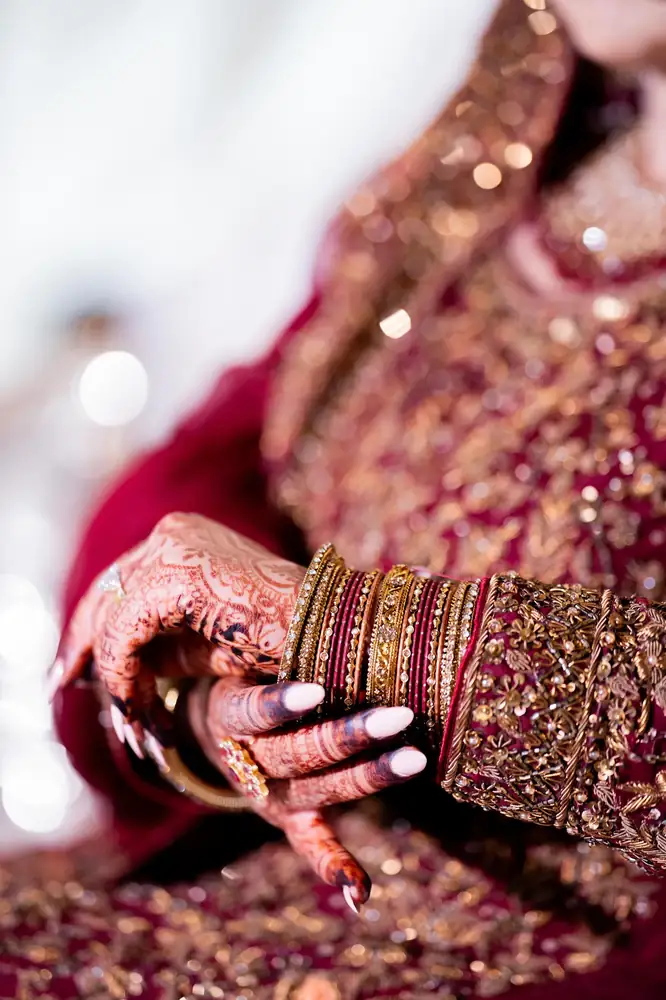
- Close-up of the hands with henna, bangles and rings.
- Looking away from the camera, which tends to feel more natural than a direct stare.
- With the dupatta lifted by a sister or friend so it floats around the bride.
If your outfit is very heavy, ask for a chair nearby so you can sit between photographs. Many brides find that weight is the real challenge, not the posing.
The father and mother moments
For many families, the most emotional photograph of the day is the first look between the bride and her father. Decide in advance how you want it to happen. Some families prefer a private moment in a quiet room; others prefer a public reveal at the door of the hall. Either is fine, and a photographer who knows the plan can set up for it.
The same applies to the mother. A quiet dua together, a hand on the head, a hug before the ceremony: these are small, unplanned moments that become the family’s favorite photographs.
Photographing a bride who wears hijab or prefers privacy
Many Pakistani brides in Houston wear hijab or prefer to limit who sees them without it. A good plan respects this and still produces beautiful photographs.
- Tell your photographer your preferences at the first conversation, not on the morning of the wedding.
- Decide which part of the day will be photographed with the hijab, and which parts will be private.
- If you prefer a specific photographer or videographer in the bridal suite, ask early so options can be discussed honestly.
- For gender-separated events, our team plans coverage in advance so that both areas are photographed respectfully. Our Nikah and Walima page explains how this works.
The Rukhsati: the end of the bride’s story
The Rukhsati is the emotional farewell, when the bride leaves her parents’ home. In many families, the father or brother holds the Holy Quran over her head as she walks out, relatives make dua and shower her with blessings, and the mother and bride often cry. It is one of the most emotional moments of the entire wedding.
Because the Rukhsati usually happens late at night, when the crowd is tired and the lighting is poor, plan for it:
- Tell the photographer when the Rukhsati will happen, even approximately.
- Ask the venue to keep the entrance well lit for the farewell.
- Choose a family member to gather the key people so that mother, father, siblings and grandparents are ready.
- For video, a clean microphone on the bride’s father or on the stage records the dua and the blessings that follow.
For an explanation of all the Pakistani wedding events, from Dholki to Walima, read our Pakistani wedding events guide.
A sample schedule for the bride’s morning
- 8:00 AM: Photographer arrives. Details are photographed while the bride is in the makeup chair.
- 9:30 AM: Hair and makeup are 80 percent complete. Close-ups of the eyes and the hands.
- 11:30 AM: Makeup finished. The bride moves to a quiet room and prepares to dress.
- 12:00 PM: Dressing, with mother, sister and friends. Photographs of the dupatta and jewelry.
- 12:45 PM: Father’s first look, followed by the parents’ photographs.
- 1:15 PM: Bridal portraits, 15 to 20 minutes.
- 1:45 PM: Travel to the venue. Houston traffic can add 20 to 40 minutes, so always add a buffer.
Your times will differ, but the order rarely changes. If the Nikah is late afternoon or evening, start the schedule later in the day.
Photography, video or both?
For the bridal session, still photography is usually the first priority. A short video with natural sound, covering the dupatta, the mother’s words and the father’s reaction, becomes the emotional core of the wedding film. If you are weighing both, see our Pakistani wedding photographer page or our South Asian videographer page. Photography starts from $599; wedding films range from $1,500 to $4,000+ depending on days, hours and edit length.
Frequently asked questions
How early should the photographer arrive for the bridal session?
Plan for the photographer to arrive when hair and makeup begin, or about 90 minutes before the bride is dressed. This gives enough time for details and candid moments.
Can you photograph the Rukhsati?
Yes. Let us know when it will happen and which family members should be present, and we will plan the position and lighting in advance.
What if the makeup artist is late?
Tell your photographer the real start time. We can photograph the details first and adjust the schedule so the bridal portraits are not rushed.
Do you work with women-only bridal rooms?
Please talk to us before booking. Every family is different, and we will tell you honestly what we can arrange for privacy and comfort.
How many bridal portraits should we expect?
It depends on your package and the light. Ask your photographer how many edited bridal portraits are included, and tell them which ones you want most.
Planning a Pakistani wedding in Houston? Tell us your date, or call or WhatsApp 832-400-4333. Our studio is at 3505 S Dairy Ashford Rd, Suite 120, Houston, open Monday to Saturday, 9 AM to 6:30 PM.